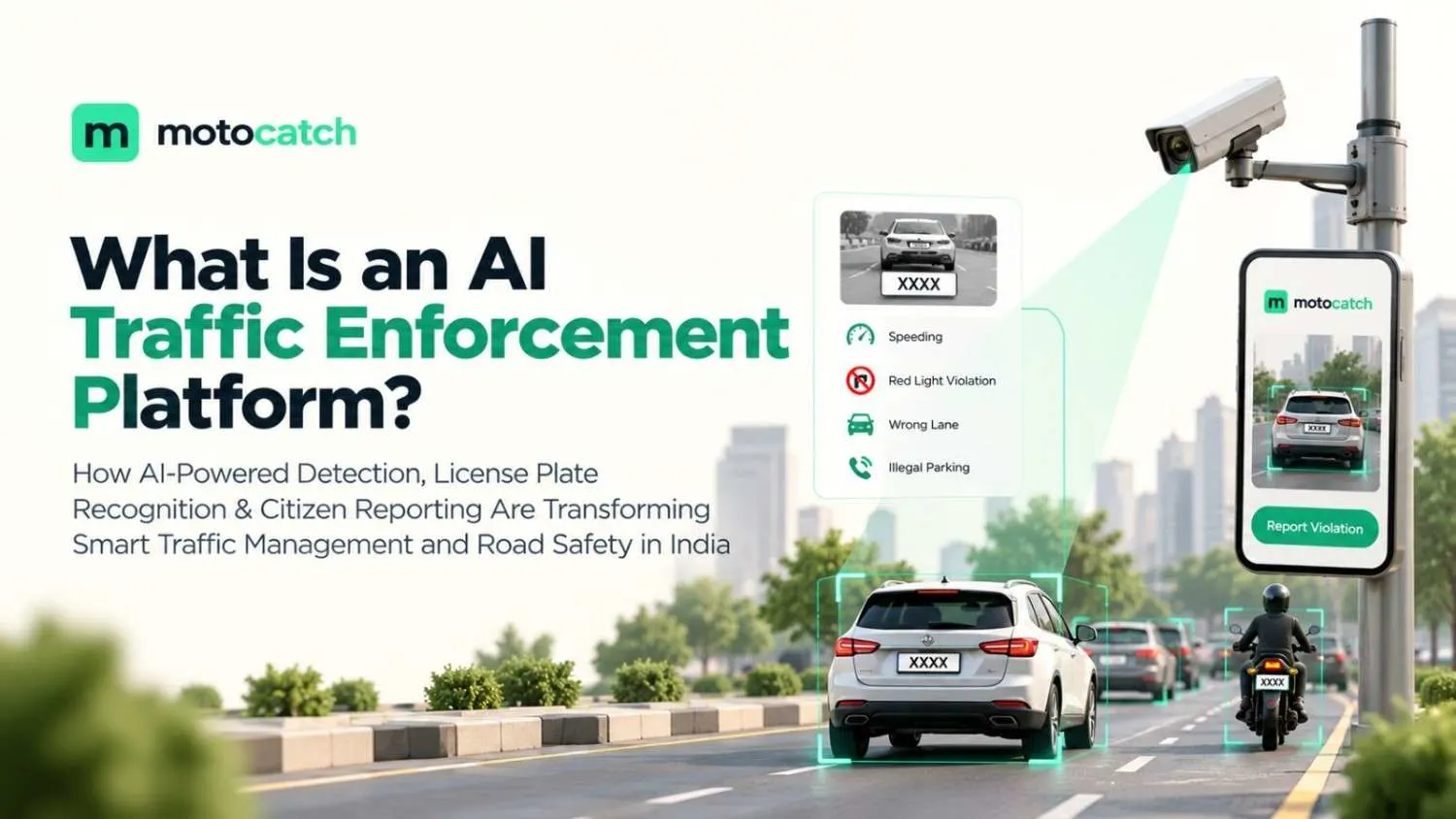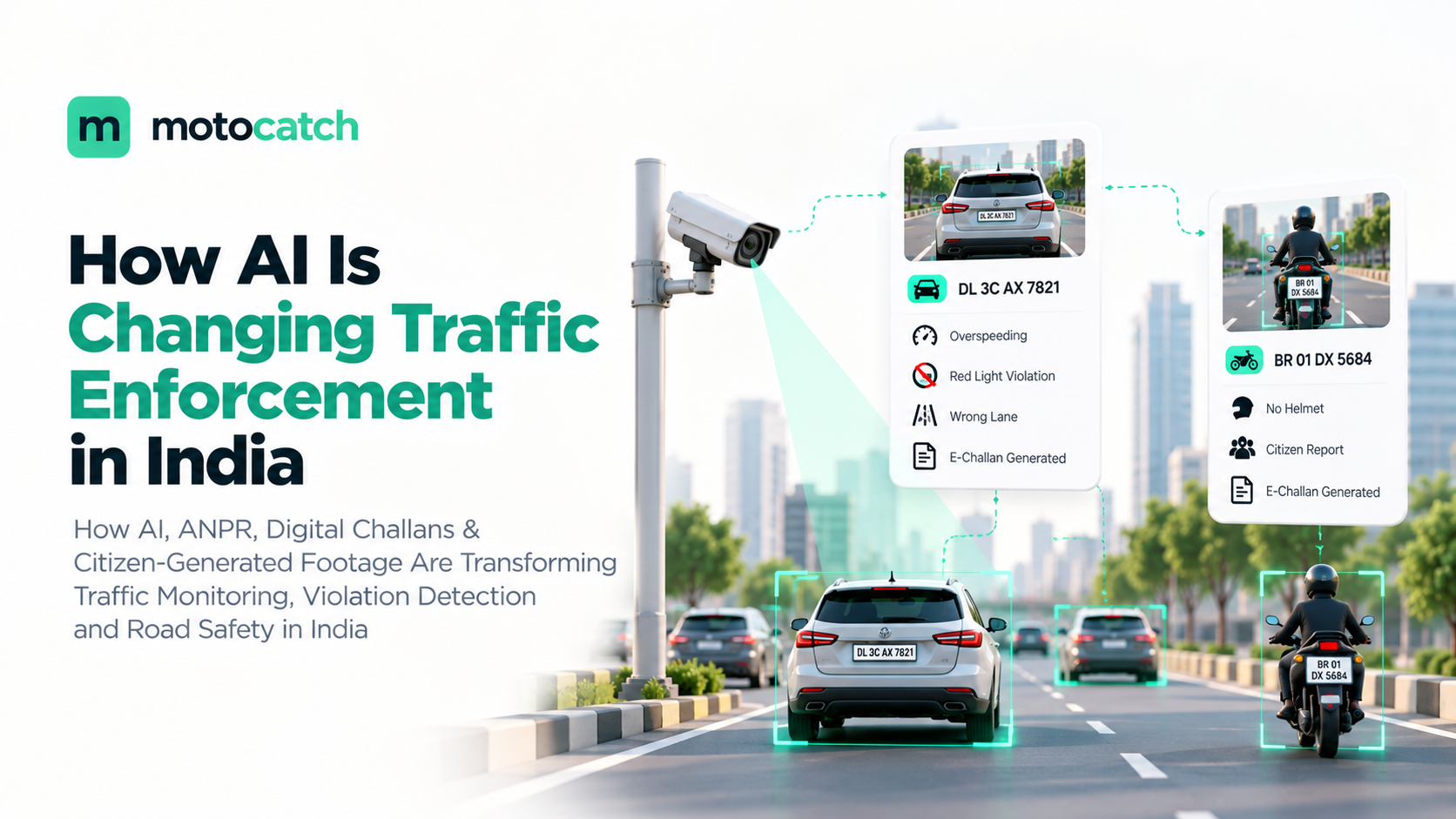
India is increasingly using technology to make traffic enforcement faster, more consistent, and more data-driven. Cameras, Automatic Number Plate Recognition (ANPR), speed detection systems, digital challans, and AI-assisted monitoring are changing how traffic violations are detected and processed.
The need for stronger enforcement is clear. According to the Ministry of Road Transport and Highways, India recorded 4,80,583 road accidents and 1,72,890 fatalities in 2023.
Technology cannot eliminate road accidents on its own, but it can help authorities monitor more roads, process evidence efficiently, and respond to violations more effectively.
Why Traffic Enforcement Needs Technology
Traditional traffic enforcement depends heavily on officers being physically present at specific locations. This approach remains important, but it has obvious limitations.
An officer cannot monitor every junction, highway, residential road, or traffic violation throughout the day. Similarly, fixed cameras can only observe the areas where they are installed.
This creates a visibility gap.
Technology can help extend that visibility by continuously monitoring traffic and identifying incidents that may otherwise go unnoticed.
How AI Is Being Used in Traffic Enforcement
AI can help traffic systems process large volumes of visual information.
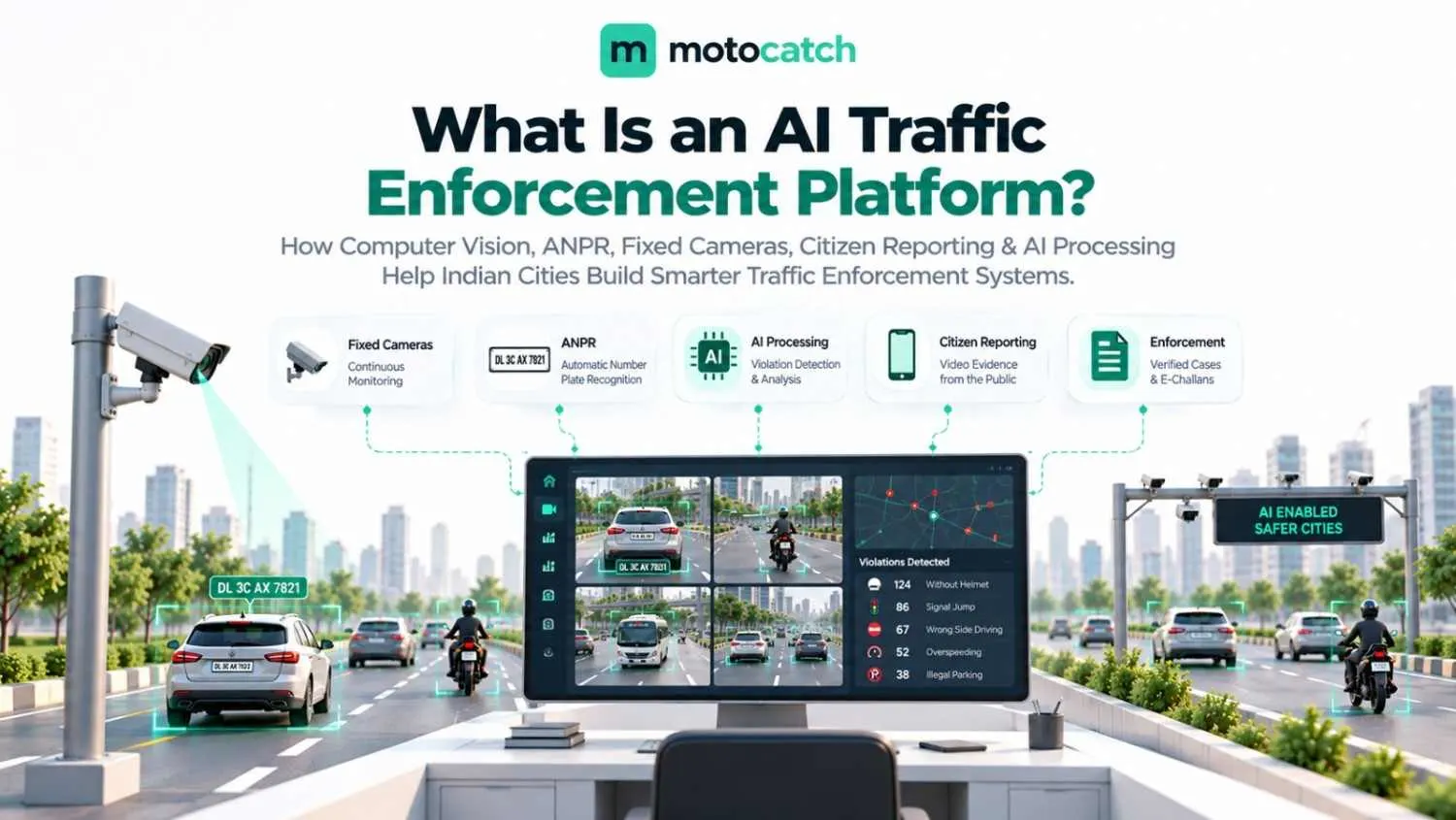
Modern Intelligent Traffic Management Systems can use technologies including:
- CCTV cameras
- Automatic Number Plate Recognition
- Speed guns
- Over-speed violation detection
- Red-light violation detection
- Other automated monitoring systems
According to the Ministry of Electronics and Information Technology's 2025–26 annual report, Intelligent Traffic Management Systems had been implemented across 25 States/UTs and smart cities, with more than 11.55 crore traffic violation notices generated through these systems.
This shows that technology-supported traffic enforcement is already operating at significant scale in India.
From Detection to Digital Challans
Detecting a violation is only one part of enforcement. The information also needs to be connected with the appropriate vehicle and enforcement process.
India's eChallan system provides a nationwide digital traffic-enforcement platform. According to the same MeitY report, more than 37.6 crore e-Challans had been issued through the system. It is integrated with systems including Vahan and Sarathi and supports digital tracking and payment of challans.
This creates a more connected enforcement process, where information can move digitally instead of relying entirely on paper-based processes.
AI Still Needs Human Verification
AI can help identify potential violations, but road environments are not always predictable.
A number plate may be partially visible. A vehicle may be moving quickly. Lighting conditions may be poor. Multiple vehicles may appear in the same frame.
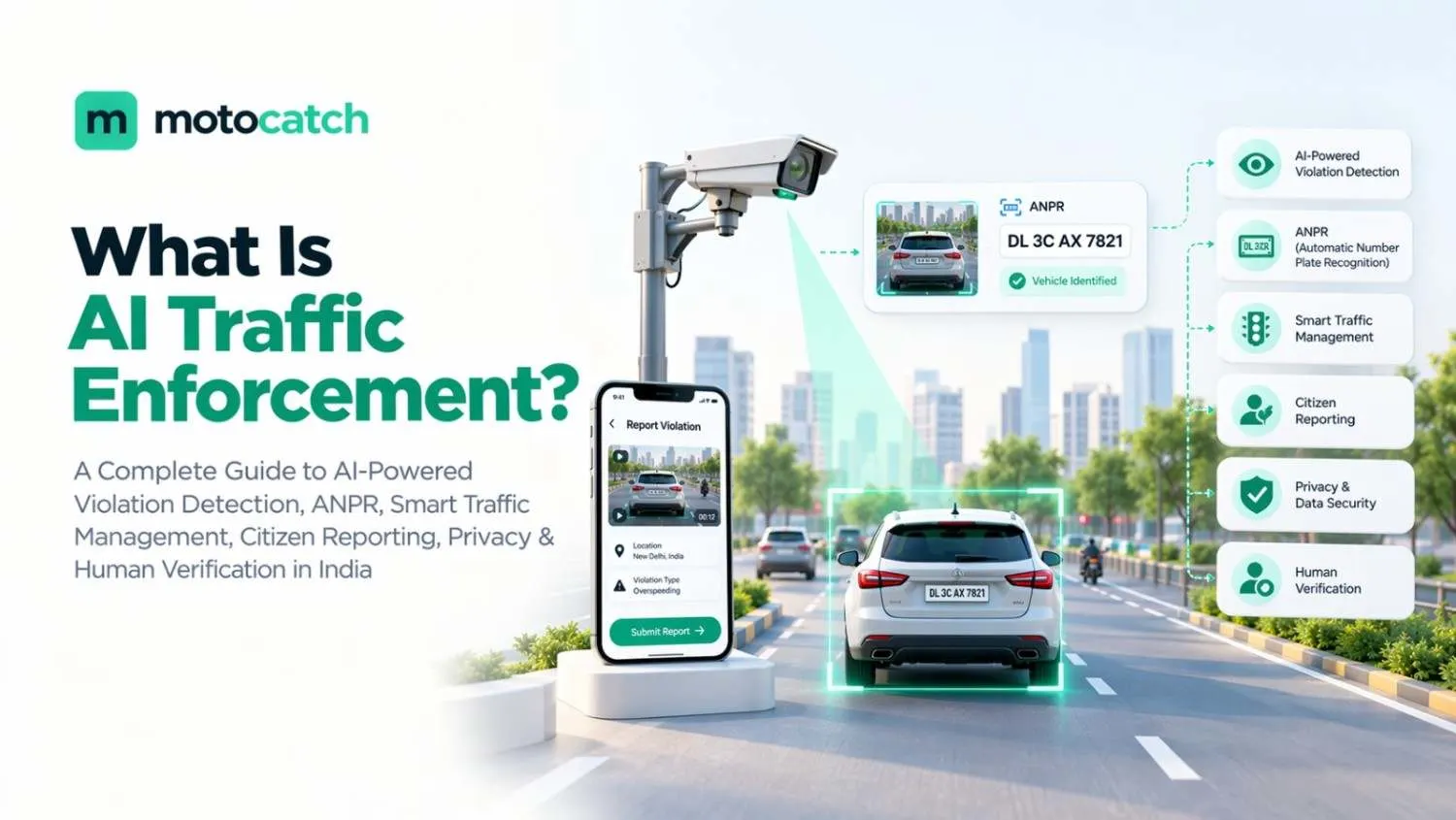
For this reason, human verification remains important.
In a July 2025 parliamentary response, the government stated that challans generated through automated AI-based systems are manually re-verified by dedicated staff at police command and control centres.
This highlights an important principle: AI can assist enforcement, but technology should work alongside appropriate human oversight.
The Next Step: More Sources of Evidence
Government cameras and intelligent traffic systems provide valuable coverage, but they cannot be everywhere.
This is where citizen-generated footage can add another layer.
People already carry smartphones capable of recording traffic incidents. The challenge is making that footage useful for enforcement.
A video sitting on someone's phone is not automatically actionable evidence. It needs to be processed, understood, and submitted through an appropriate reporting process.
How MotoCatch.ai Uses AI for Traffic Reporting
MotoCatch.ai is designed around this gap between capturing a traffic violation and turning that recording into a structured report.
MotoCatch.ai allows citizens to record traffic violations using a smartphone. AI processes the footage to identify the violation, read the vehicle number plate, and generate a report that can be shared through appropriate channels.
The technology is being developed with practical Indian road conditions in mind, including moving vehicles, partial number plates, poor lighting, and patchy network connectivity.
This gives MotoCatch.ai a different role from a conventional fixed traffic camera. Instead of adding another camera at one location, it explores how existing smartphones can become an additional source of traffic-violation evidence.
Why AI-Powered Enforcement Matters
The future of traffic enforcement is unlikely to depend on one technology.
A stronger system can combine:
| Technology | Role |
|---|---|
| CCTV | Continuous monitoring |
| ANPR | Vehicle identification |
| AI | Video and violation analysis |
| eChallan | Digital enforcement |
| Human verification | Evidence validation |
| Citizen reporting | Additional road-level information |
The objective is not to automate enforcement blindly. It is to give authorities more useful information while maintaining appropriate verification and accountability.
Conclusion
AI is changing traffic enforcement in India by helping authorities monitor roads, process visual information, identify potential violations, and connect evidence with digital enforcement systems.
The next opportunity is extending this technology beyond fixed infrastructure.
MotoCatch.ai explores how AI can help turn citizen-recorded traffic footage into structured reports, creating another potential layer between everyday road users and traffic enforcement.
As India's digital traffic infrastructure continues to grow, the combination of AI, government systems, human verification, and citizen participation could make traffic enforcement more responsive and data-driven.
MotoCatch.ai is working toward making traffic-violation reporting more accessible by bringing AI-powered analysis to the smartphone.