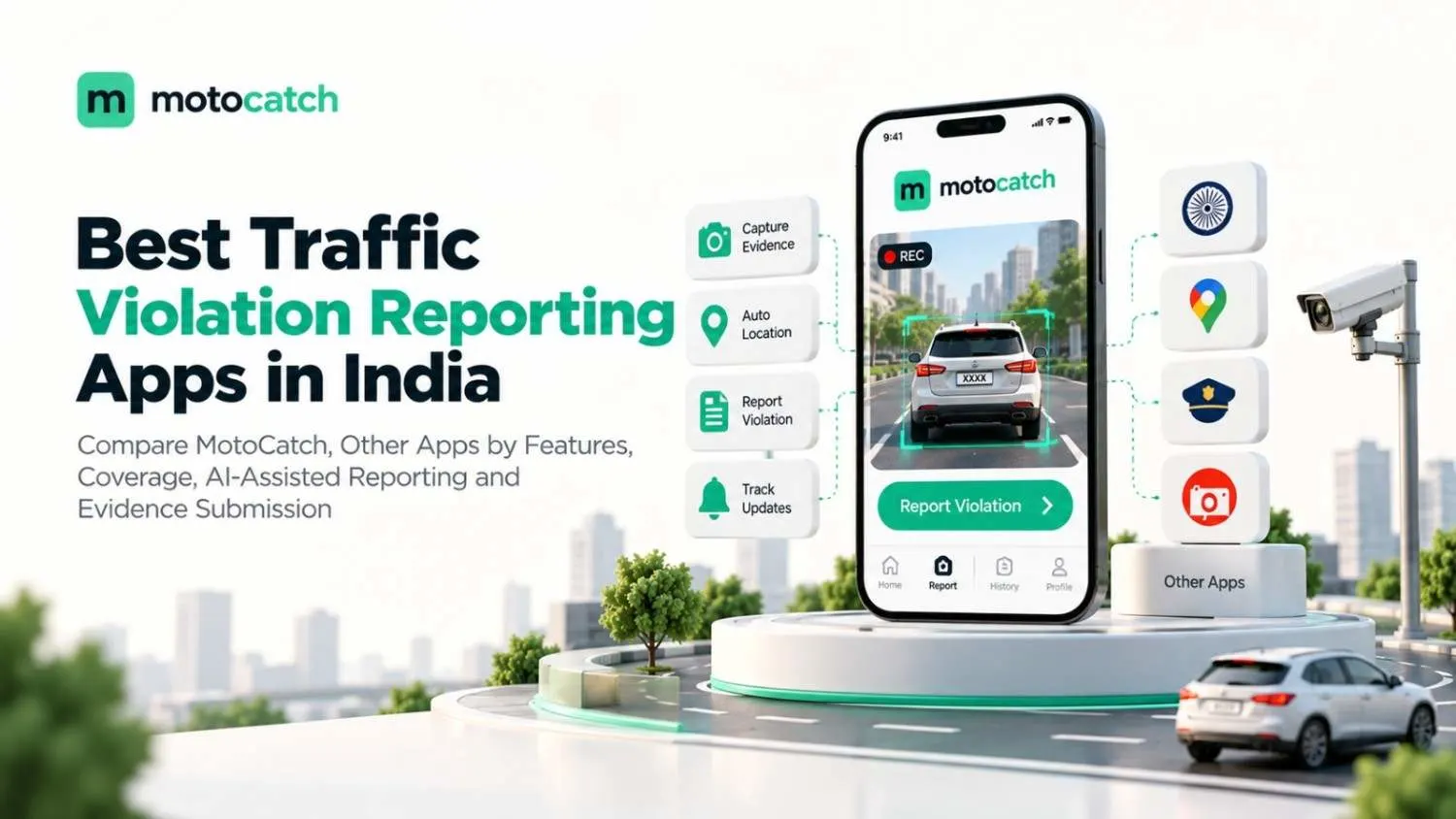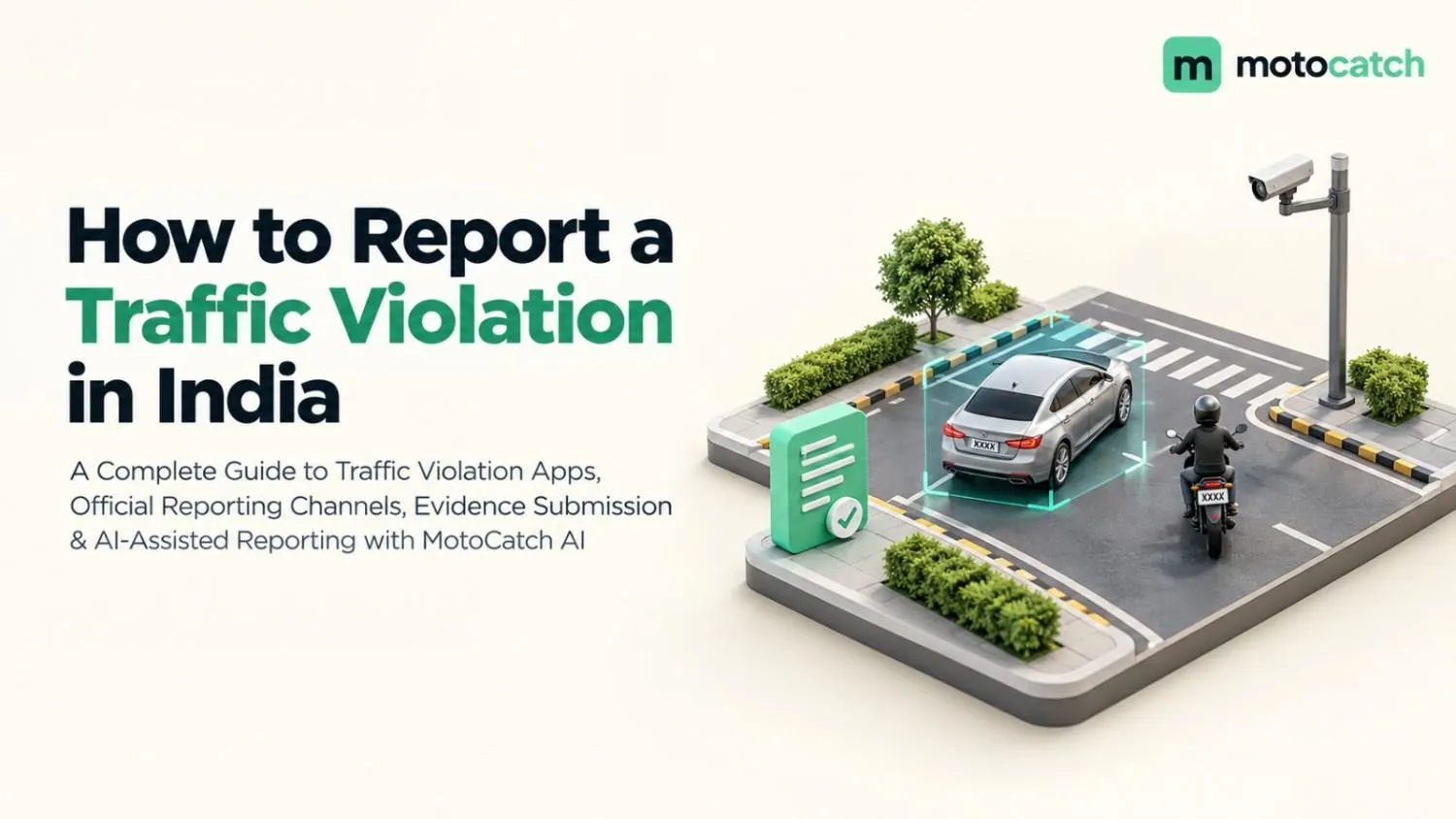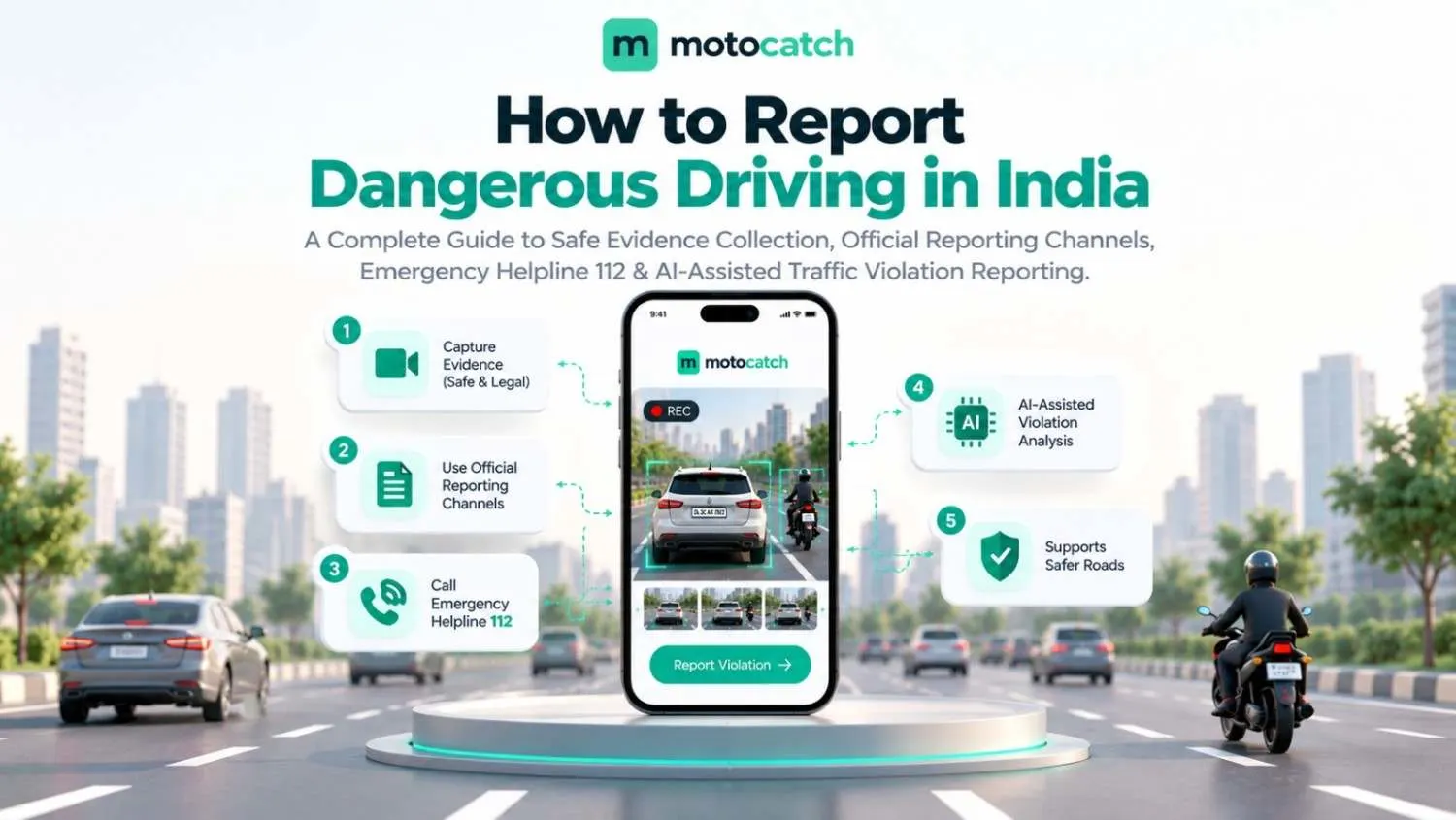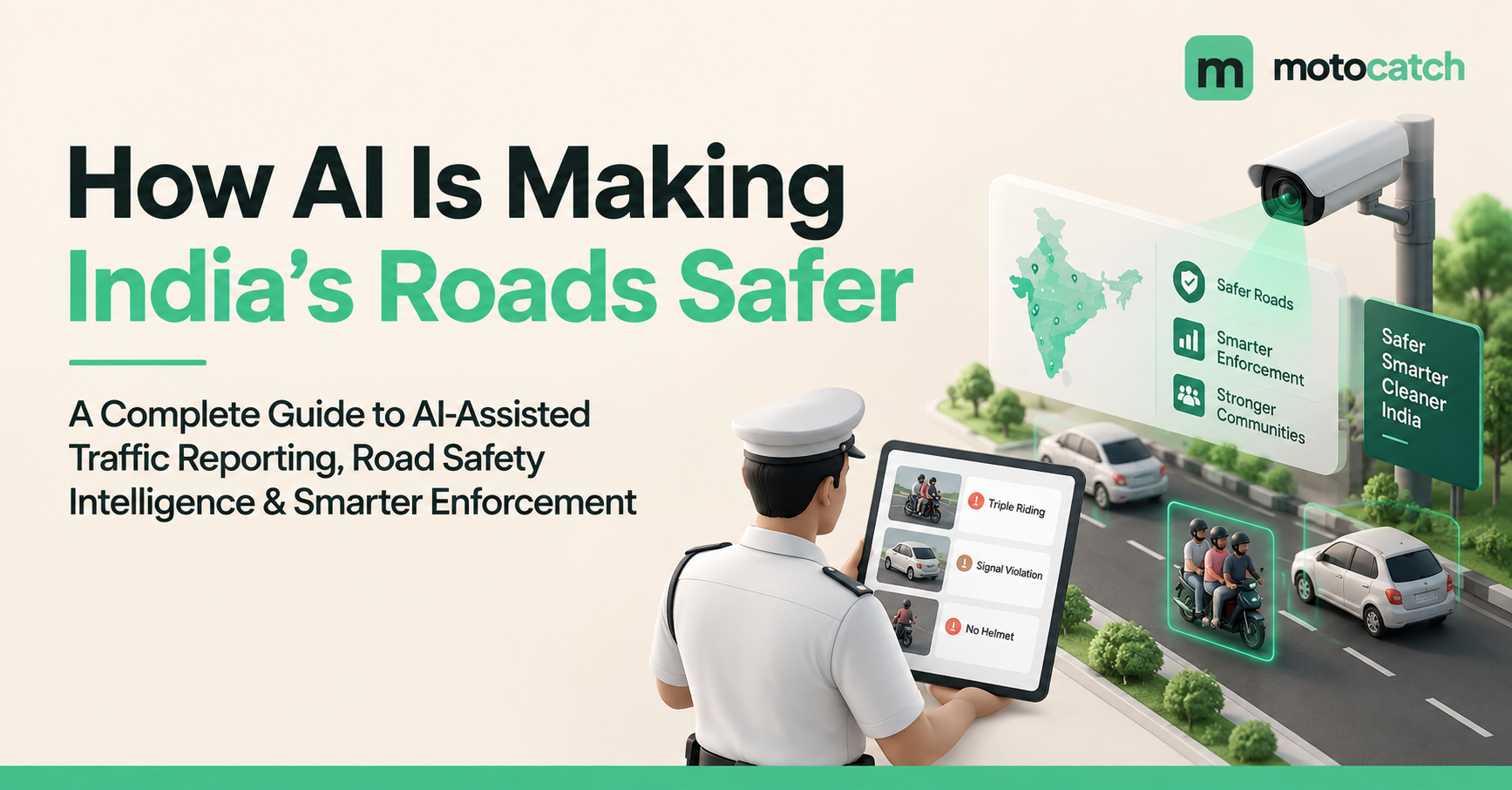
Every report you file is more than a complaint — it's a small, direct way to help improve road safety in your city.
India records some of the highest road accident numbers in the world. According to the Ministry of Road Transport and Highways' (MoRTH) Road Accidents in India 2024 report, the country saw 4,87,707 road accidents and 1,77,175 fatalities in a single year — an average of nearly 1,336 accidents and 485 deaths every day, or roughly one death every three minutes. Over-speeding alone accounted for close to 70% of these accidents, injuries, and deaths, while missing helmets and seatbelts contributed to tens of thousands more.
Traffic police and CCTV networks cover major junctions, but they simply cannot watch every street, lane, and highway stretch around the clock. This is exactly where citizen reporting fills the gap — and where platforms like Motocatch are changing how ordinary people contribute to road safety, using AI Road Safety technology to turn a phone camera into a tool for structured, verifiable evidence.
If you've ever wondered how to report a traffic violation in India, the good news is that the process has become far simpler over the last few years. Most state traffic police departments now accept complaints through websites, mobile apps, and even WhatsApp — and AI-assisted tools are making it even easier to capture the right evidence the first time.
One video. Ten insights. Modern AI-assisted reporting tools like Motocatch can analyse a single uploaded video and automatically detect:
- Helmet usage
- Seat belt usage
- Wrong-side driving
- Signal jump
- GPS location
- Number plate
- Timestamp
- Road condition
- Road signs
- Infrastructure analytics for future planning
This turns one ordinary phone video into a rich, structured dataset — useful not just for a single complaint, but for building the kind of Road Safety Analytics that support Smart City Road Monitoring and long-term Infrastructure Audit initiatives.
Why Citizen Road Observations Matter
Every broken traffic rule is a small risk that can turn into a life-changing accident. MoRTH's 2024 data shows that non-use of helmets contributed to over 54,000 deaths, while seatbelt non-compliance was linked to more than 14,000 fatalities. Two-wheeler riders alone account for close to 44% of all road deaths in India, and National Highways — despite carrying just 31% of accidents — account for over 36% of fatalities because of higher speeds.
Enforcement agencies are stretched thin. A traffic constable posted at a single junction cannot simultaneously catch the rider jumping a red light two streets away, the car parked illegally outside a school, or the truck overtaking on a blind curve. This is the enforcement gap that Citizen Road Observation is designed to close.
When residents report violations with clear evidence, they give traffic police the ability to act on incidents they would otherwise never see. Over time, this changes driver behaviour in a neighbourhood far more effectively than occasional patrols. It's also why cities like Delhi, Bengaluru, Pune, and several others have built dedicated citizen-reporting apps — and why AI-powered tools such as Motocatch's traffic violation detection technology are being adopted to make each report more accurate and actionable, as part of a broader move toward Road Safety Intelligence.
Is There a National Portal to Report Traffic Violations?
There isn't a single, unified portal where every citizen in India reports every kind of traffic violation — road safety enforcement in India is largely state-subject, so each state traffic police department runs its own reporting channel. However, a few centralised systems are relevant:
- Parivahan e-Challan (echallan.parivahan.gov.in) — the national digital challan database. It's mainly used to check and pay challans issued by ANPR cameras or traffic police, not to file new citizen complaints.
- Intelligent Traffic Management System (ITMS) — the backend infrastructure that many states use to link automated camera detections with challan issuance.
- State-specific apps and portals — the actual point of citizen reporting in most cities.
In short: for checking or paying a challan, the national Parivahan portal works across states. For reporting a fresh violation you witnessed, you'll almost always need your state or city's dedicated app or website.
State-Wise Traffic Violation Reporting Resources
Reporting procedures vary slightly by state. Here's a snapshot of some of the more active citizen-reporting programs in India:
| State / City | App or Portal | Notable Feature |
|---|---|---|
| Delhi | Traffic Prahari (relaunched Sept 2024, formerly Traffic Sentinel) | Monthly rewards up to ₹50,000 for verified reports |
| Bengaluru | BTP ASTraM | Replaced the earlier Public Eye app; also handles fine payment |
| Pune | PTP Traffic Cop App | Covers accidents, potholes, and waterlogging alongside violations |
| Kerala | Traffic Offence Reporting App (Kerala Police) | Simple photo-based reporting with fine payment option |
| Pan-India | echallan.parivahan.gov.in | Central database to check and pay challans, not to file new reports |
If your city isn't listed here, search "[your city] traffic police app" or check your state traffic police's official website — most have added a "report violation" or "citizen reporting" section in recent years.
How to Capture Actionable Road Safety Evidence: Step-by-Step
The exact screens differ from app to app, but the underlying process is consistent across almost every state:
1. Collect Evidence Safely
Take a clear photo or short video of the violation. Never do this while you are driving — pull over, or hand your phone to a passenger. A shaky, blurry, or half-captured video is far less likely to result in action.
2. Note the Key Details
Record the vehicle's registration number, the exact location (a nearby landmark or GPS pin helps), and the date and time. This is the information that traffic police use to verify and act on your complaint — apps that use OCR-based number plate recognition can extract this automatically from your photo, reducing manual entry errors.
3. Open the Official Reporting Channel
Go to your state's traffic police app, website, or e-challan portal, and select the option to report a violation.
4. Upload Your Evidence
Attach your photo or video along with the violation type, location, and time. Make sure the vehicle's number plate is clearly visible in the frame.
5. Submit and Track
Review all details carefully before submitting. Most portals generate a reference or complaint number — save it so you can track the status later.
What Makes a High-Quality Road Safety Observation?
Whether your complaint gets acted on often comes down to the quality of what you submit. A strong report typically includes:
- A sharp, well-lit photo or video of the violation in progress
- A clearly readable number plate
- The precise location (street name, landmark, or GPS coordinates)
- Accurate date and time
- A short, factual description of what happened
Reports that are missing even one of these details — especially a readable number plate — are far more likely to be rejected during verification.
Manual Reporting vs. AI-Assisted Reporting
| Aspect | Traditional Manual Reporting | AI-Assisted Reporting (e.g., Motocatch) |
|---|---|---|
| Evidence capture | User manually times the photo/video | On-device AI detects the violation moment automatically |
| Number plate reading | Manually typed, prone to typos | OCR-based recognition reduces entry errors |
| Evidence structure | Free-form photo/video upload | Structured digital evidence package designed to support verification and enforcement workflows |
| Routing | User selects department manually | Evidence prepared for submission through the relevant official reporting channel or enforcement workflow. |
| Time required | Several minutes per report | Significantly faster, lower-effort workflow |
Common Mistakes to Avoid While Reporting
A handful of avoidable errors can get an otherwise valid complaint dismissed. Steer clear of:
- Blurry, dark, or overly distant photos and videos
- Missing or incorrect vehicle registration numbers
- Edited, cropped, or otherwise altered images
- Capturing evidence while driving yourself
- Filing a complaint without any supporting evidence at all
Responsible, accurate reporting also helps enforcement teams focus their limited time on genuine violations rather than sifting through low-quality or duplicate submissions.
How Motocatch Simplifies Traffic Violation Reporting
Manually collecting evidence, identifying vehicle details, and filling out lengthy complaint forms is exactly the friction that stops many well-meaning citizens from reporting violations they witness every day.
Motocatch is built to remove that friction. Its on-device AI can detect traffic violations directly from a dashcam or phone camera feed, while OCR technology automatically identifies vehicle registration numbers from the captured footage — no manual typing, no guesswork on illegible plates. Once a violation is detected, Motocatch prepares a structured digital evidence package designed to support verification and enforcement workflows, and routes it to the appropriate traffic enforcement authority.
See it in action on the How Motocatch Works page, or explore the underlying technology — including automated violation detection, ANPR-based number plate recognition, and structured evidence generation that can support road safety analysis, infrastructure improvement, awareness initiatives, research, and, where applicable, enforcement workflows. For traffic departments and civic bodies, this same evidence pipeline can also feed Infrastructure Audit and Smart City Road Monitoring programs, turning everyday citizen footage into actionable, city-wide Road Safety Intelligence.
Is There a Reward for Reporting Traffic Violations?
Some cities do incentivise citizen reporting. Delhi's Traffic Prahari scheme, for instance, offers a monthly reward structure of up to ₹50,000 for its most active and accurate reporters, based on a points system tied to verified violations. Not every state offers monetary rewards, but the broader goal across all these programs is the same: making citizens active partners in road safety enforcement, not just passive commuters.
Conclusion
Understanding how to report a traffic violation in India turns every commuter into a potential contributor to safer roads. Every well-documented report helps enforcement agencies identify dangerous driving patterns, reinforces compliance with traffic laws, and — over time — chips away at the accident and fatality numbers that MoRTH publishes each year.
Technology is closing the gap between witnessing a violation and doing something useful about it. Instead of fumbling for the right details after a red-light jump has already sped past you, tools like Motocatch capture the moment, read the plate, and generate structured, AI-assisted evidence that can support road safety analysis, infrastructure improvement, awareness initiatives, research, and, where applicable, enforcement workflows — the foundation of a smarter, data-driven approach to Road Safety Intelligence across India's cities.
Ready to make your reports count? Download Motocatch to see how AI-assisted detection and evidence generation work in real time, or if you're with a traffic department or civic body, get in touch with our team to request a pilot for your city.